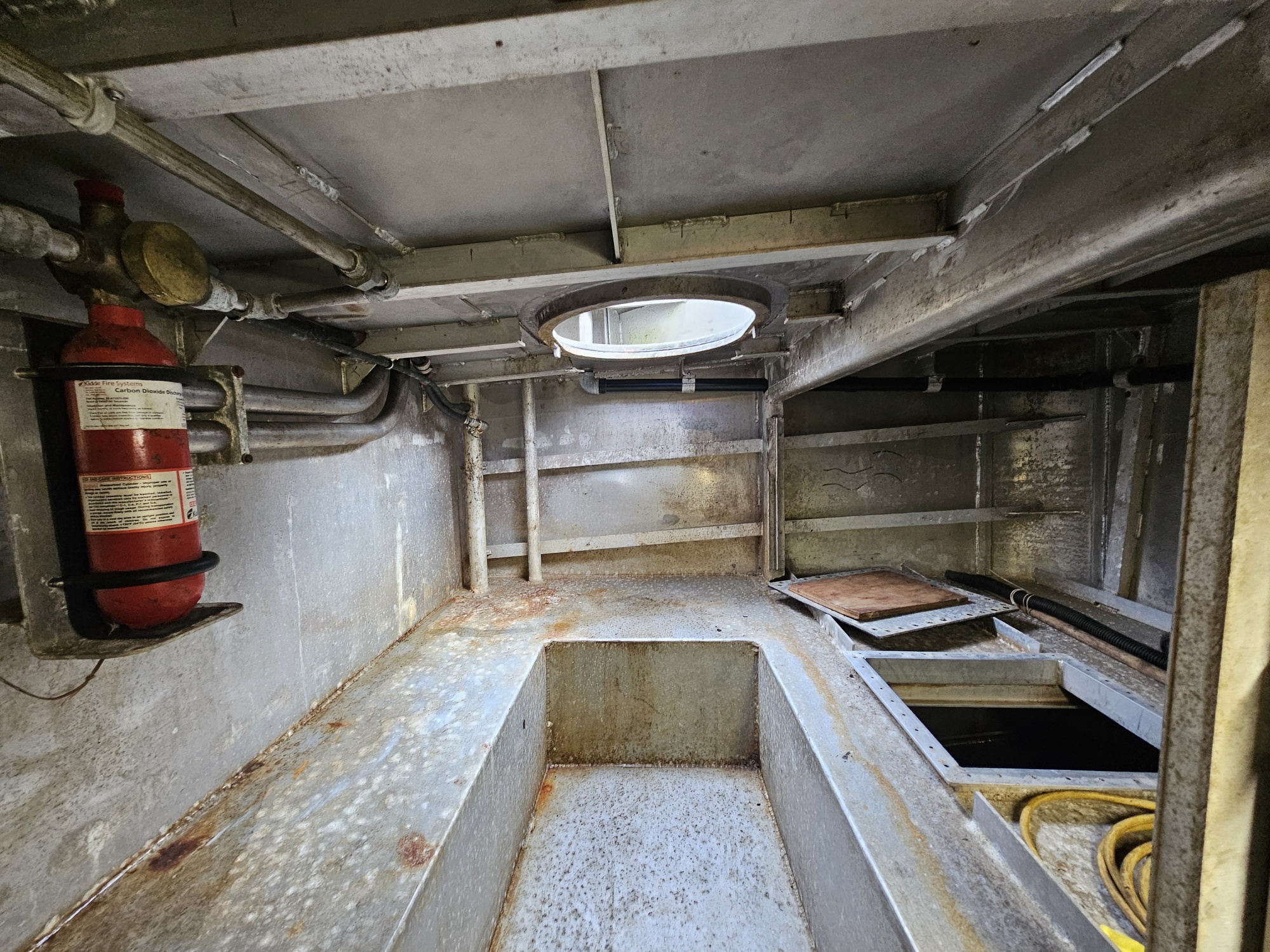
“B.. But I don’t think this is a Confined Space!” – Common misconceptions!
- “There’s plenty of airflow in there, so I don’t think it’s a confined space”
A space may have natural air flow depending on location and/or design, and still be considered a confined space. Many hazards may exist in the space, including respiratory hazards, even in the presence of natural air flow. While possibly providing sufficient ventilation, a qualified person must perform an assessment on the flow rates required to control the atmospheric hazards, in order to confirm if natural ventilation may be sufficient. The assessment must also consider other hazards inside the space, such as piping, limited or restricted access, source of contaminants, and the hazards created by the scope of work itself, to name a few.
- “It’s completely open to the atmosphere, so I don’t think it’s a confined space”
One of the defining characteristics of a Confined space as per the OHS Regulation, is that they are spaces that are enclosed or partially enclosed. A space does not have to be fully enclosed to be considered confined. Work inside shafts for example may be considered confined space work, even if the shaft is open to the atmosphere at the top. Also consider that some atmospheric hazards are heavier than air, and may accumulate inside the space, regardless of an open top.
- “The sump is only 4 feet deep, so I don’t think it’s a confined space”
WorkSafeBC according to guideline 9.1-2, considers that “A worker should be considered to have entered a confined space when the breathing zone of the worker crosses the plane of the confined space access”. The breathing zone is the volume of air within 9 inches from your nose.
Ask yourself, am I really going to keep my head above the manhole without bending down even once?
Ask yourself, what’s the height of your head when lying on the floor, only 4 ft deep, after a heart-attack? Do you think you’ll be visible to others outside without a dedicated standby person?
Ask yourself, even if I was noticed, how am I going to be rescued? How many people can lift my body outside a manhole that’s only 4 ft deep if they don’t have rescue equipment like a tripod? Can they just put me on a stretcher and walk out?
Ask yourself, if a toxic gas is heavier than air and somehow accumulated within the space, how many feet you think it can be off the floor? Is this information you’d have available?
Even if you follow the WorkSafeBC guideline above, how can you confirm that there are no respiratory hazards that will reach your breathing zone, even when your head is outside the space?
A Qualified Person, as defined in OHS Regulation 9.11, must perform an assessment to determine if the space is confined or not!